








“I helped test this product and I sprayed it on 4 out of 5 curtains in my house. The only one I didn't spray got mould this winter.”
Curtains are the most expensive fabric in the house and the only one nobody ever cleans.
The couch gets cleaned. The carpet gets cleaned. Sheets go through the wash every week. Curtains hang there for years, because taking them down is a job and everybody knows it's a job.
Meanwhile they're doing the hardest work in the room.
Every night the warm air meets the cold glass and runs down it as water, and your curtains are the only thing hanging against it. Damp by morning, damp again by midnight, a hundred times a season. Down south that's winter. Up north it's the wet, and it's worse — the fabric never really dries out in between.
You'd never hang a wet towel in a bedroom and leave it there for the season. There's four square metres of one in front of every window in the house.
That's where curtain mould starts. Not the house, not the weather — the one surface you've been cleaning around.
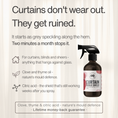
So this isn't a cleaner. It's what you do so there's nothing to clean. A light mist over both sides, once a month through the damp season. Nothing comes off the rail.
We gave it to a handful of people to test before launch. One of them sprayed four of her five curtains. The fifth — the one she skipped — was the one that got mould this winter. She didn't set out to run that experiment. She just ran it.
New curtains? Start now, while there's nothing to see. Two minutes a window.
Grey already along the hem? Wash them first — our Laundry Powder is made for that — then start.
Almost everything sold for mould is built for after you can see it. Two of ours are. This is the other half of the job, and almost nobody makes a product for it.
We've made eucalyptus products since 1895. This is the first thing we've made for the curtains. — Tony Taig, 5th generation
The couch gets cleaned. The carpet gets cleaned. Sheets go through the wash every week. Curtains hang there for years, because taking them down is a job and everybody knows it's a job.
Meanwhile they're doing the hardest work in the room.
Every night the warm air meets the cold glass and runs down it as water, and your curtains are the only thing hanging against it. Damp by morning, damp again by midnight, a hundred times a season. Down south that's winter. Up north it's the wet, and it's worse — the fabric never really dries out in between.
You'd never hang a wet towel in a bedroom and leave it there for the season. There's four square metres of one in front of every window in the house.
That's where curtain mould starts. Not the house, not the weather — the one surface you've been cleaning around.
So this isn't a cleaner. It's what you do so there's nothing to clean. A light mist over both sides, once a month through the damp season. Nothing comes off the rail.
We gave it to a handful of people to test before launch. One of them sprayed four of her five curtains. The fifth — the one she skipped — was the one that got mould this winter. She didn't set out to run that experiment. She just ran it.
New curtains? Start now, while there's nothing to see. Two minutes a window.
Grey already along the hem? Wash them first — our Laundry Powder is made for that — then start.
Almost everything sold for mould is built for after you can see it. Two of ours are. This is the other half of the job, and almost nobody makes a product for it.
We've made eucalyptus products since 1895. This is the first thing we've made for the curtains. — Tony Taig, 5th generation
We name every ingredient. Not "fragrance." Not "active blend." Six things, and every one of them has a job.
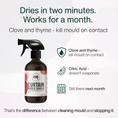
Citric Acid — from citrus. It makes the surface of the fabric acidic and takes away the minerals mould needs to grow. It's the only thing in the bottle that doesn't dry off, so it's still working weeks later. It also makes the clove and thyme far stronger.
100% Pure Clove Oil — it starves the mould. Mould has to take in food to grow. Clove shuts the door on it.
100% Pure Thyme Oil — it breaks the mould apart. Thyme wrecks the wall holding it together and bends it out of shape as it tries to grow.
Denatured Ethanol — methylated spirits. Alcohol, with a bitter taste added so nobody drinks it. It kills what's on the fabric the second you spray. Then it dries the fabric and vanishes. Nothing left behind.
Caprylyl/Capryl Glucoside — made from coconut. It mixes the oils into the water. Without it the oils float on top in the bottle and land on your curtains in patches.
Purified Water — the base.
No bleach. No chlorine. No caustic soda. No synthetic fragrance. No dyes. No coating.
Most fabric sprays hide behind the word "fragrance." Legally they don't have to tell you what's in it. That's the stuff that stays on the curtain in the room you sleep in. We'd rather name six things than hide one.
Four different attacks, at the same time. Most sprays manage one.
Citric Acid — from citrus. It makes the surface of the fabric acidic and takes away the minerals mould needs to grow. It's the only thing in the bottle that doesn't dry off, so it's still working weeks later. It also makes the clove and thyme far stronger.
100% Pure Clove Oil — it starves the mould. Mould has to take in food to grow. Clove shuts the door on it.
100% Pure Thyme Oil — it breaks the mould apart. Thyme wrecks the wall holding it together and bends it out of shape as it tries to grow.
Denatured Ethanol — methylated spirits. Alcohol, with a bitter taste added so nobody drinks it. It kills what's on the fabric the second you spray. Then it dries the fabric and vanishes. Nothing left behind.
Caprylyl/Capryl Glucoside — made from coconut. It mixes the oils into the water. Without it the oils float on top in the bottle and land on your curtains in patches.
Purified Water — the base.
No bleach. No chlorine. No caustic soda. No synthetic fragrance. No dyes. No coating.
Most fabric sprays hide behind the word "fragrance." Legally they don't have to tell you what's in it. That's the stuff that stays on the curtain in the room you sleep in. We'd rather name six things than hide one.
Four different attacks, at the same time. Most sprays manage one.
If your curtains are new — start here.
Nothing to clean. Nothing to check. Spray them the week they go up and keep going. This is the easiest the job will ever be.
If mould has already started — wash first.
This isn't a cleaner. Washable curtains go in the machine, and our Laundry Powder does it in a normal cycle. Dry-clean-only goes to the dry cleaner. Get them clean and dry. Then start.
Test a hidden spot.
Same as you would with anything new on a curtain. Spray the back of the hem lightly, let it dry, then do the rest. Five minutes of testing saves a regret.
The spray.
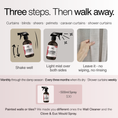
1. Shake the bottle.
2. Light, even mist over both sides. Top to bottom, about 30cm back. Never soak the fabric.
3. Do the bottom metre properly. That's where the water runs to. That's where mould starts.
4. Walk away. Don't wipe it. Don't rinse it. It's meant to stay on.
It dries in minutes. Nothing comes off the rail.
How often.
Once a month through the damp months — winter down south, the wet up north.
Once every three months when it's dry.
Shower curtains: once a week. They get soaked every day, so they need it far more often than a window curtain.
The oils fade after a few weeks. The acid lasts longer. Spraying on that rhythm keeps both of them working.
The smell — worth reading before you do a bedroom.
Clove and thyme. Sharp and warm. Most people love it.
Two things make the difference. Spray in the morning, not at bedtime. And use less than you think — a light mist over the whole curtain beats a wet patch, and going heavy is the main reason anyone ends up not liking it.
Open a window. By evening it's settled to a faint warm note.
Storage.
Upright, cool, out of the sun.
Nothing to clean. Nothing to check. Spray them the week they go up and keep going. This is the easiest the job will ever be.
If mould has already started — wash first.
This isn't a cleaner. Washable curtains go in the machine, and our Laundry Powder does it in a normal cycle. Dry-clean-only goes to the dry cleaner. Get them clean and dry. Then start.
Test a hidden spot.
Same as you would with anything new on a curtain. Spray the back of the hem lightly, let it dry, then do the rest. Five minutes of testing saves a regret.
The spray.
1. Shake the bottle.
2. Light, even mist over both sides. Top to bottom, about 30cm back. Never soak the fabric.
3. Do the bottom metre properly. That's where the water runs to. That's where mould starts.
4. Walk away. Don't wipe it. Don't rinse it. It's meant to stay on.
It dries in minutes. Nothing comes off the rail.
How often.
Once a month through the damp months — winter down south, the wet up north.
Once every three months when it's dry.
Shower curtains: once a week. They get soaked every day, so they need it far more often than a window curtain.
The oils fade after a few weeks. The acid lasts longer. Spraying on that rhythm keeps both of them working.
The smell — worth reading before you do a bedroom.
Clove and thyme. Sharp and warm. Most people love it.
Two things make the difference. Spray in the morning, not at bedtime. And use less than you think — a light mist over the whole curtain beats a wet patch, and going heavy is the main reason anyone ends up not liking it.
Open a window. By evening it's settled to a faint warm note.
Storage.
Upright, cool, out of the sun.
Bedroom curtains are the obvious one. The pair against the window that runs with water every night of the damp season. That's what it was built for.
But it's the same problem anywhere fabric hangs against cold glass.
Fabric roman blinds. Fabric roller blinds. Sheers behind heavier drapes, where the air never moves. Pelmets and valances. The curtains in the caravan you closed up at Easter. Rentals with single-glazed aluminium windows — the worst offenders in the country.
And fabric shower curtains. That's the wettest hanging fabric in the house — it gets soaked again every day. Spray it once a week, when it's properly dry.
If it hangs, it's fabric, and it gets damp, this works there.
But it's the same problem anywhere fabric hangs against cold glass.
Fabric roman blinds. Fabric roller blinds. Sheers behind heavier drapes, where the air never moves. Pelmets and valances. The curtains in the caravan you closed up at Easter. Rentals with single-glazed aluminium windows — the worst offenders in the country.
And fabric shower curtains. That's the wettest hanging fabric in the house — it gets soaked again every day. Spray it once a week, when it's properly dry.
If it hangs, it's fabric, and it gets damp, this works there.
| AEOC | Bleach-based mould spray | |
|---|---|---|
| Bleach (sodium hypochlorite) | None | Yes |
| Safe on painted walls | Yes | No |
| Must leave the room to clean | Stay in the room | Ventilate first |
| Synthetic fragrance | Essential oils only | Yes |
| Full ingredient list | Every ingredient listed | Partial |
| Safe around pets & kids | Yes | Not stated |
Why clove and thyme, and not just one?
Clove works. We've used it against mould for years — it starves the mould, so it can't take in what it needs to grow. Thyme adds a second front. It pulls apart the wall holding the mould together. Most sprays have one active. This one has two, on an acid surface that makes both of them stronger.
My curtains are brand new. Isn't it too early?
No. Mould starts the first time the fabric gets damp — not months later. On a cold night that's the first week they're up. Everything else we make for mould is for after. This is the only one that's better used before. Start now and you never get to the part where you're looking up how to clean them.
I can't see any mould. How do I know it's working?
You won't — not the way you know a cleaner worked. That's the honest trade with anything preventative. What you notice is what doesn't happen. The hem stays clean through the damp season. The room doesn't get that closed-up smell when you've been away. The test isn't next week. It's the end of the season.
One of the people who tested it for us ended up running that comparison by accident:
“I helped test this product and I sprayed it on 4 out of 5 curtains in my house. The only one I didn't spray got mould this winter.”
— Product tester, winter 2026
I've washed them twice and it keeps coming back. Will this fix it?
It'll break the cycle — but wash them first. Washing takes the mould off. It doesn't change the fabric, which is why it's back before the season's out. This changes the fabric. Wash, spray, then spray again next month. The routine is the product.
Will it take off the mould that's on there now?
No. It isn't a cleaner and we won't pretend it is. Wash the curtains — our Laundry Powder does it in a normal cycle — then use this to stop it coming back.
Will the grey marks come out?
Probably not, and it's better you know. Mould leaves a mark whether it's alive or dead. If it survived a wash, it's in the fibre. This stops new growth. It won't lift an old mark. On badly marked sheers the honest answer is replacement.
Will it stain my curtains?
No. It's built on citric acid — the same acid in your laundry rinse and in a lemon — and it dries clear. No bleach, no dye, no coating that can yellow. It's the same acid base as our All Natural Mould Remover Wall Cleaner, which people use on white painted ceilings. Test the back of the hem first, as you would with anything new.
How often?
Once a month through the damp months. Once every three when it's dry. Shower curtains once a week — they get soaked every day. The oils fade after a few weeks, the acid lasts longer, and spraying on that rhythm keeps both working.
What does it smell like?
Clove and thyme. Sharp and warm, and you'll notice it while you're spraying. Then it settles — because that's what essential oils do. They evaporate. Synthetic fragrance is built to cling for days; that's the whole point of it, and it's what's still sitting on the curtain in the room you sleep in. Ours doesn't. Within a couple of hours you're down to a faint warm note.
Why does it need methylated spirits?
Two jobs. It kills what's on the fabric the second you spray. And with the coconut solubiliser it's what holds the oils in the water, so they go on evenly instead of in patches. Then it dries off and leaves nothing behind.
Do I have to leave it on, or rinse it off?
No. No waiting, no scrubbing, no rinsing. The acid is meant to stay on the fabric — that's the point. Spray it and walk away.
Doesn't leaving acid on the fabric damage it?
No. Citric acid is one of the most ordinary things in a laundry — a rinse aid, a water softener, a descaler. Clothes go through it wash after wash for years. Your curtains get a light mist that dries in minutes. It changes the surface, not the fabric.
Where can't I use it?
- Painted walls, ceilings and painted timber. The meths marks paint — use our All Natural Mould Remover Wall Cleaner instead.
- Varnished or sealed timber. Same reason.
- Vinyl blinds and shutters. Not fabric, and the oils can mark plastic.
- Carpet, upholstery and mattresses. Our Australian Eucalyptus Non Toxic Spray is made for those.
- Mould that's already on the fabric. This doesn't clean. Wash them first.
Not sure about your fabric? Test a hidden spot. Five minutes of testing saves a regret.
Three mould sprays on your site. Which one do I need?
Paint = Wall Cleaner. Hard surfaces = Clove Spray. Fabric that hangs = this bottle. The All Natural Mould Remover Wall Cleaner is for painted walls and ceilings. The Clove & Eucalyptus Mould Spray is for tiles, grout, silicone, glass, chrome and window frames. This one is for curtains and fabric blinds — and unlike the other two, it stops mould rather than removes it.
Is it safe around kids and pets?
Keep it out of reach, like anything else under the sink. Spray with the room empty and let the curtains dry, which takes minutes. Once dry there's nothing in the air. Don't spray near animals.
What if I don't like it?
Lifetime money-back guarantee. No return, no questions, no expiry. If it's not right for you, we'll refund you in full.
Clove works. We've used it against mould for years — it starves the mould, so it can't take in what it needs to grow. Thyme adds a second front. It pulls apart the wall holding the mould together. Most sprays have one active. This one has two, on an acid surface that makes both of them stronger.
My curtains are brand new. Isn't it too early?
No. Mould starts the first time the fabric gets damp — not months later. On a cold night that's the first week they're up. Everything else we make for mould is for after. This is the only one that's better used before. Start now and you never get to the part where you're looking up how to clean them.
I can't see any mould. How do I know it's working?
You won't — not the way you know a cleaner worked. That's the honest trade with anything preventative. What you notice is what doesn't happen. The hem stays clean through the damp season. The room doesn't get that closed-up smell when you've been away. The test isn't next week. It's the end of the season.
One of the people who tested it for us ended up running that comparison by accident:
“I helped test this product and I sprayed it on 4 out of 5 curtains in my house. The only one I didn't spray got mould this winter.”
— Product tester, winter 2026
I've washed them twice and it keeps coming back. Will this fix it?
It'll break the cycle — but wash them first. Washing takes the mould off. It doesn't change the fabric, which is why it's back before the season's out. This changes the fabric. Wash, spray, then spray again next month. The routine is the product.
Will it take off the mould that's on there now?
No. It isn't a cleaner and we won't pretend it is. Wash the curtains — our Laundry Powder does it in a normal cycle — then use this to stop it coming back.
Will the grey marks come out?
Probably not, and it's better you know. Mould leaves a mark whether it's alive or dead. If it survived a wash, it's in the fibre. This stops new growth. It won't lift an old mark. On badly marked sheers the honest answer is replacement.
Will it stain my curtains?
No. It's built on citric acid — the same acid in your laundry rinse and in a lemon — and it dries clear. No bleach, no dye, no coating that can yellow. It's the same acid base as our All Natural Mould Remover Wall Cleaner, which people use on white painted ceilings. Test the back of the hem first, as you would with anything new.
How often?
Once a month through the damp months. Once every three when it's dry. Shower curtains once a week — they get soaked every day. The oils fade after a few weeks, the acid lasts longer, and spraying on that rhythm keeps both working.
What does it smell like?
Clove and thyme. Sharp and warm, and you'll notice it while you're spraying. Then it settles — because that's what essential oils do. They evaporate. Synthetic fragrance is built to cling for days; that's the whole point of it, and it's what's still sitting on the curtain in the room you sleep in. Ours doesn't. Within a couple of hours you're down to a faint warm note.
Why does it need methylated spirits?
Two jobs. It kills what's on the fabric the second you spray. And with the coconut solubiliser it's what holds the oils in the water, so they go on evenly instead of in patches. Then it dries off and leaves nothing behind.
Do I have to leave it on, or rinse it off?
No. No waiting, no scrubbing, no rinsing. The acid is meant to stay on the fabric — that's the point. Spray it and walk away.
Doesn't leaving acid on the fabric damage it?
No. Citric acid is one of the most ordinary things in a laundry — a rinse aid, a water softener, a descaler. Clothes go through it wash after wash for years. Your curtains get a light mist that dries in minutes. It changes the surface, not the fabric.
Where can't I use it?
- Painted walls, ceilings and painted timber. The meths marks paint — use our All Natural Mould Remover Wall Cleaner instead.
- Varnished or sealed timber. Same reason.
- Vinyl blinds and shutters. Not fabric, and the oils can mark plastic.
- Carpet, upholstery and mattresses. Our Australian Eucalyptus Non Toxic Spray is made for those.
- Mould that's already on the fabric. This doesn't clean. Wash them first.
Not sure about your fabric? Test a hidden spot. Five minutes of testing saves a regret.
Three mould sprays on your site. Which one do I need?
Paint = Wall Cleaner. Hard surfaces = Clove Spray. Fabric that hangs = this bottle. The All Natural Mould Remover Wall Cleaner is for painted walls and ceilings. The Clove & Eucalyptus Mould Spray is for tiles, grout, silicone, glass, chrome and window frames. This one is for curtains and fabric blinds — and unlike the other two, it stops mould rather than removes it.
Is it safe around kids and pets?
Keep it out of reach, like anything else under the sink. Spray with the room empty and let the curtains dry, which takes minutes. Once dry there's nothing in the air. Don't spray near animals.
What if I don't like it?
Lifetime money-back guarantee. No return, no questions, no expiry. If it's not right for you, we'll refund you in full.
The Australian Eucalyptus Oil Company has been making eucalyptus products since 1895. Five generations. Over 130 years. This curtain spray is made the same way we've always made things — with 100% transparency.
If you're not completely happy, we'll refund you in full. No return required. No questions asked. No expiry on that promise.
5,000+ reviews. 4.9 stars.
— Tony Taig, 5th generation
If you're not completely happy, we'll refund you in full. No return required. No questions asked. No expiry on that promise.
5,000+ reviews. 4.9 stars.
— Tony Taig, 5th generation

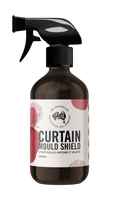
Curtain Mould Shield
$30.00
✓Added to your cart
The damp gets more than the curtains.
The Wall Cleaner for the painted walls and ceiling. The Clove Spray for the tiles and grout. And the Laundry Powder — that's the wash the curtains need before you spray them. Added to this order, no second checkout.
★ 4.9 from 5,000+ reviews
Added to this order — no second checkout
🛡️ FREE Parcel Protection — lost or damaged, we replace it free